How to Write a Living Will, and the Four Layers That Decide Whether It Works
A living will is the document that speaks to your doctors about emergency treatment at the point when you cannot speak to them yourself. It operates while you are alive, only once you can no longer communicate, and it says nothing whatsoever about your money.
That last point is where most of the confusion sits, and it is worth settling before anything else. The National Institute on Aging draws the line plainly in its guidance on preparing a living will: a living will covers medical treatment, while a will provides legal guidance about a person's estate, their property and financial assets, care for dependents, gifts, and arrangements such as a funeral or burial. Two documents that share a word and overlap in nothing. Having one in place does not begin to cover what the other does.
This page is about the first of the two. If you are looking for the second, we cover it separately in how to write a will.
The first of those three numbers is the argument for writing anything down at all. The people who love you, asked to guess, get a meaningful share of it wrong. Not because they are careless, but because they are guessing.
What a living will actually decides
A living will is narrower than people expect. It is not a general statement of preferences about care. It addresses a specific set of interventions that arise when someone is dying or critically ill and cannot speak for themselves.
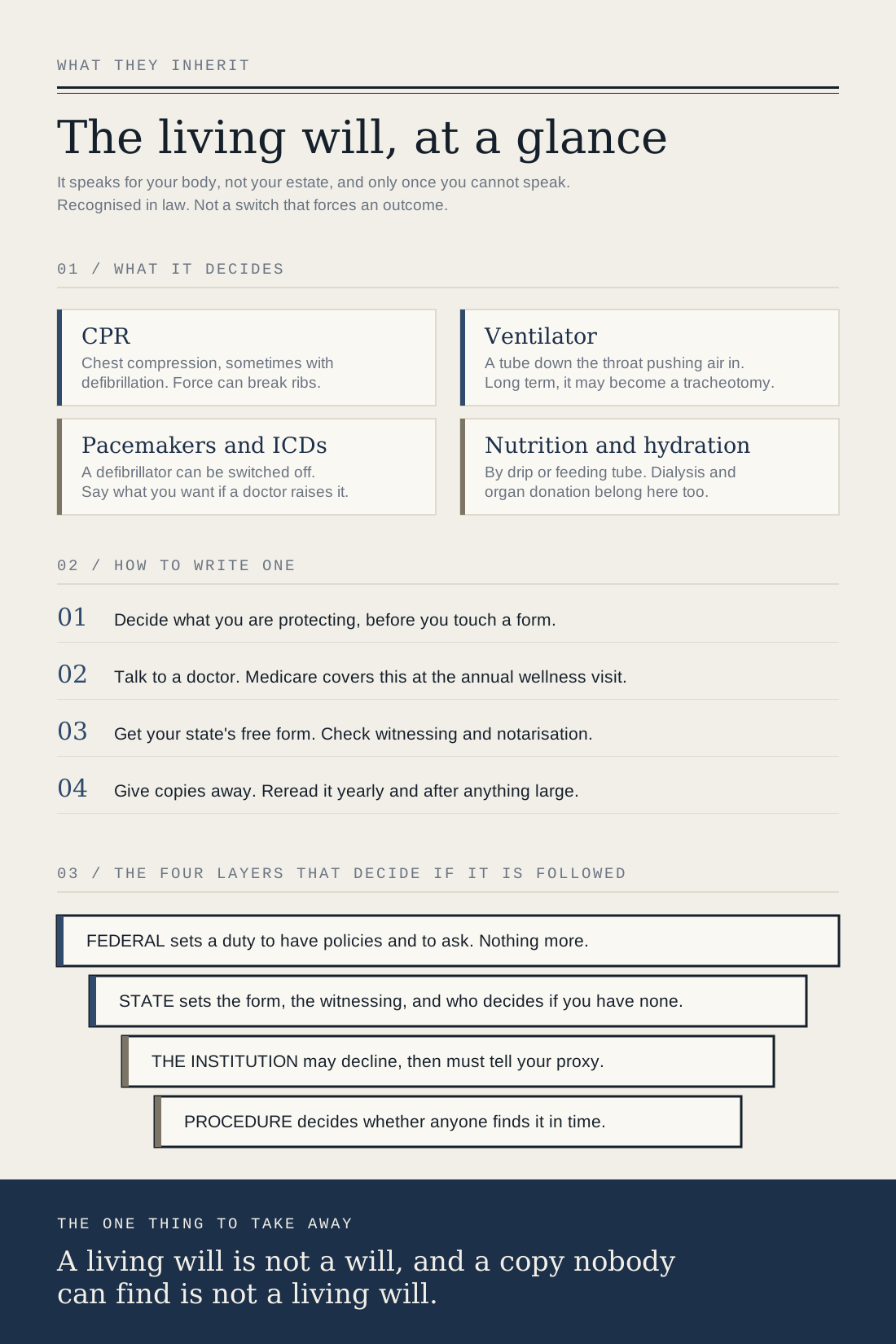
The NIA guidance groups the decisions into four areas, and it is worth knowing what each one physically involves before you sign a form that accepts or declines it.
| Intervention | What it involves | The point people miss |
|---|---|---|
| CPR | Repeated forceful compression of the chest, with air pushed into the lungs, sometimes with defibrillation and medicines | The force can break ribs, and federal guidance notes it is less likely to work in older adults with chronic conditions or those hospitalised with serious illness |
| Ventilator | A machine pushing air into the lungs through a tube inserted down the throat, a process called intubation | Intubation is uncomfortable enough that sedation is often used, and long-term use may lead to a tracheotomy through the neck |
| Pacemakers and ICDs | Devices that regulate the heartbeat, or shock it back into rhythm | An implantable defibrillator can be switched off if other life-sustaining measures are declined, so the document should say what you want if a doctor raises it |
| Artificial nutrition and hydration | Fluids and nutrients delivered by IV or feeding tube, short term through the nose or longer term into the stomach | NIA points to research finding that feeding by these methods late in life rarely extends it to any meaningful degree, and notes hand feeding may carry fewer risks for people with dementia |
That list is not exhaustive, and the four rows above are the ones federal aging guidance treats in detail rather than the full range of what the document can carry. The National Library of Medicine's advance directives topic page adds dialysis and organ or tissue donation to the set of instructions people commonly include. If dialysis is already part of your medical picture, it belongs in the document explicitly rather than by inference from a general statement about life support.
Read that table once as a person rather than a planner. Every row is a decision that someone will make on your behalf, in a corridor, at speed, on a day nobody has scheduled. The document exists so that the person making it is not guessing.
How to write one, in the order the steps actually happen
The NIA sets out the process in four movements, and the sequence matters more than it looks.
Start before the paperwork. The useful question at this stage is not which treatments you want but what you are trying to protect. Some people want every available intervention if there is a plausible route back to a family table. Others have a clear point past which they would not want life prolonged. Neither answer is the correct one. The form cannot do this thinking for you, and a form completed without it tends to be a set of boxes rather than an instruction.
Talk to a doctor before you write, not after. This is the step most people skip and the one that changes the document most. A doctor can tell you which decisions your particular health is likely to produce, which is a different conversation from the general one. Advance care planning discussions are covered by Medicare as part of the annual wellness visit, so for many people the appointment already exists. If you are privately insured, confirm the position with your insurer.
Get your state's form, then read its execution requirements closely. You do not have to buy anything. The NIA's guidance on finding advance directive forms says advance directives can be established for little or no cost, that many states publish their own free forms, and it names the routes to them: your State Attorney General's office, your local Area Agency on Aging through the Eldercare Locator, or a download from AARP, the American Bar Association or the National Hospice and Palliative Care Organization. Veterans are pointed to their local VA office, which offers a directive written for veterans. Once you have the form, the requirements to execute it validly, typically witnessing or notarisation, are set where you live rather than nationally. This is the step at which a technically void document gets created by somebody who did everything else right.
If your life runs across two states, prepare two forms. The same guidance advises people who spend substantial time in more than one state to complete the form for each and keep a copy in each place. Anyone with a second home, a long stay near adult children, or a winter address should read that as addressed to them.
Store it where it will be found, and give copies away. A living will in a locked drawer is not a living will. Copies go to your health care proxy and your health care provider. We make the same argument about the rest of the paperwork in where an estate plan is kept, and who can find it, because the failure mode is identical.
Then comes the part almost nobody does. The NIA sets the floor at rereading it once each year, and again whenever something large shifts, offering a divorce or a change of address as its examples. A directive signed at fifty and never opened again is speaking on behalf of somebody who has since changed their mind.
The four layers that decide whether anyone follows it
This is the part that general guidance tends to flatten into a single reassurance, and it should not be flattened, because the four layers answer to different authorities and fail in different ways.
The federal layer sets an obligation to ask, and only that. Federal law requires hospitals, skilled nursing facilities, home health agencies and hospice programs participating in Medicare to maintain written policies and procedures respecting advance directives, at 42 U.S.C. 1395cc. Read the obligation precisely. It is a duty to have policies and to inform, not a federal command that your particular instructions be carried out.
The state layer sets the form and the fallback. The document itself, its witnessing and notarisation requirements, and what happens when there is no document at all are matters of the law where you live. NIA notes that without an advance directive, state law determines who may make medical decisions for you, and that this typically runs to a spouse, then parents, then adult children. It also flags the case that catches unmarried couples: a partner who has not been named as proxy can be excluded from decision-making entirely. If you are unmarried and your partner is the person you would want deciding, the naming is not a formality.
The institutional layer can decline. This is the sentence from the NIA guidance on advance directives that most families have never heard. In its words, an advance directive is "legally recognized but not legally binding". A clinician can decline it on three grounds: where it crosses a line for them personally, where the facility's own rules forbid it, and where it falls outside what accepted medical practice permits. The guidance is clear about what has to happen next, which is that your proxy is told immediately and a transfer of your care is considered. That is a real and orderly process. It is also not the same thing as your instructions being carried out.
The procedural layer decides whether it is in the room. A living will is a statement of wishes. It is not a medical order, and hospital staff do not act on it the way they act on an order in the chart. The NIA describes a separate family of documents for that, including do not resuscitate and do not intubate orders, out-of-hospital DNR orders, and POLST or MOLST forms, which are medical orders clinicians can act on immediately in an emergency and which are typically created when someone is critically ill or near the end of life. A living will that declines CPR is still helped by a DNR order sitting in the chart, and whether POLST exists where you live is a question for your state health department.
What a living will cannot do
It cannot cover situations nobody anticipated. This is the argument for naming a health care proxy in a durable power of attorney for health care alongside the living will rather than instead of it. The document handles the decisions you foresaw. The proxy handles the ones you did not, which in a serious accident is most of them.
It cannot move money, name an executor, or say who cares for your children. Those belong to the will and the wider set of instruments we map in what an estate plan actually consists of.
It cannot make the conversation unnecessary. The federal guidance is unusually direct that the conversations are the most important part of advance care planning, and the written document follows them. A proxy who has your form but has never heard you talk about any of it is still, at the margin, guessing.
If planning this raises real distress rather than the ordinary discomfort of the subject, that is worth taking seriously and worth taking to a person rather than a page. In the United States, the 988 Suicide and Crisis Lifeline is reachable by call or text at 988. For the medical questions, a clinician who knows your history is the right audience, and for the legal execution requirements, a qualified professional licensed where you live.
Last reviewed by the What They Inherit Editorial Team on September 7, 2026. Our sourcing and AI-use rules are public on the editorial standards page. This is general editorial content and not legal, tax, financial or medical advice. Advance directive law, including what the document is called, how it must be witnessed and who decides in the absence of one, differs by jurisdiction and changes over time. Speak to a qualified professional licensed where you live, and to a clinician who knows your history, before acting on anything here.
FAQ
Does a living will do anything for my money or my property?
No. Not one line of it touches your estate. A living will is a medical instrument, and its entire subject is which treatments you accept or refuse during a period when you cannot speak for yourself. The National Institute on Aging is explicit that this is a different document from a will, which is where property, financial assets, dependants, gifts and funeral arrangements are handled. People routinely complete one and believe the other is now covered. It is not, and the gap tends to surface at the worst possible moment. We set the two side by side, along with the four other instruments most plans need, in what an estate plan actually consists of.
Do I need a lawyer to write a living will?
Not necessarily, and federal aging guidance describes a process built around free state advance directive forms rather than around drafting. The step that genuinely catches people is execution rather than wording: the form may need witnessing or notarisation, and those requirements are set where you live. If your circumstances are not straightforward, or you are unmarried and want a partner to decide for you, confirm the position with a qualified professional licensed in your jurisdiction.
Is a living will legally binding?
No, though that is not the same thing as saying it can be ignored. Federal aging guidance draws a careful line between a document the law recognises and a document the law compels anyone to obey. It carries real weight and it is the best evidence of your wishes that exists, but it is not a switch that forces a particular outcome. The section on the institutional layer above sets out the specific grounds on which a provider may decline and what they are then required to do.
Is a living will the same as a DNR?
No. A living will is a statement of your wishes. A do not resuscitate order is a medical order placed in your chart that tells staff not to attempt CPR. The National Institute on Aging treats them as separate and notes that even where a living will states CPR is not wanted, having a DNR order in the medical file is still useful, because it is the document staff act on in the moment. Related orders include do not intubate, do not hospitalize, out-of-hospital DNR, and POLST or MOLST forms.
What happens if I do not have a living will?
State law where you live determines who may make medical decisions on your behalf. Federal aging guidance describes this as typically running to a spouse, then parents if available, then adult children, with some states allowing a close friend familiar with your values where there is no family, and a physician representing your best interests otherwise. The case worth flagging is an unmarried couple: a partner who has not been formally named can be excluded from decision-making altogether.
How often should I update a living will?
Once a year at minimum, and again whenever something significant changes. The NIA names retirement, a move out of state, a divorce and a meaningful change in health as the events that should trigger a rereading. The underlying reason is worth holding onto: preferences formed in good health often read very differently to the same person after a diagnosis.
Does Medicare pay for the conversation with my doctor?
Yes, as part of the annual wellness visit, which for many people means the appointment already exists and only the agenda has to change. Private insurance is a separate question to put to your own insurer.
What is a living will?
A living will is a written statement of the medical treatments you would accept or refuse in a period when you are alive but no longer able to communicate. Those two conditions are the whole of its scope. It does not reach your money or your property, and its subject is narrower than a general wish about how you would like to be looked after. The ground it actually covers is a defined list of emergency interventions, which federal aging guidance sorts into four areas: CPR, a ventilator, pacemakers and implantable defibrillators, and artificial nutrition and hydration. Its standing is worth stating in the same breath. It is the strongest evidence of your wishes that exists, and it is still not a document the law compels a clinician to obey.
What is a health care proxy?
A health care proxy is the person you authorise to speak for you on medical questions once you are no longer able to answer them, appointed in a durable power of attorney for health care. Set against a living will, the relationship is a division of labour rather than a choice between two options. The written document settles the situations you were able to foresee; the proxy settles everything else, and after a sudden injury that is most of what a hospital will need decided. Two consequences follow. Where nobody has been appointed, the law of your state picks the decision-maker instead, and an unmarried partner who was never formally named can be shut out altogether. And where a clinician declines to follow your written instructions, it is the proxy who is told and who takes part in whatever happens next. Give that person a copy of the paperwork, then have the conversation, because a proxy holding a form they have never discussed with you is still working from guesswork.
What is a POLST form?
A POLST, or MOLST, is a medical order rather than a statement of preference. That single difference is why it matters. Hospital staff act on orders written in the chart, so a POLST works in the moment in a way a document describing your wishes cannot, and the same is true of do not resuscitate, do not intubate and out-of-hospital orders. The National Institute on Aging places these in a separate family from advance directives and describes them as usually drawn up once a person is seriously ill or approaching the end of life. They complement the directive you wrote while you were well rather than replacing it. The form is also not available everywhere, and your state health department is who can tell you whether it exists near you.
Sources
- preparing a living will (nia.nih.gov)
- advance directives topic page (medlineplus.gov)
- annual wellness visit (medicare.gov)
- finding advance directive forms (nia.nih.gov)
- 42 U.S.C. 1395cc (law.cornell.edu)