What a Family Trust Actually Creates, and Who Has to Run It
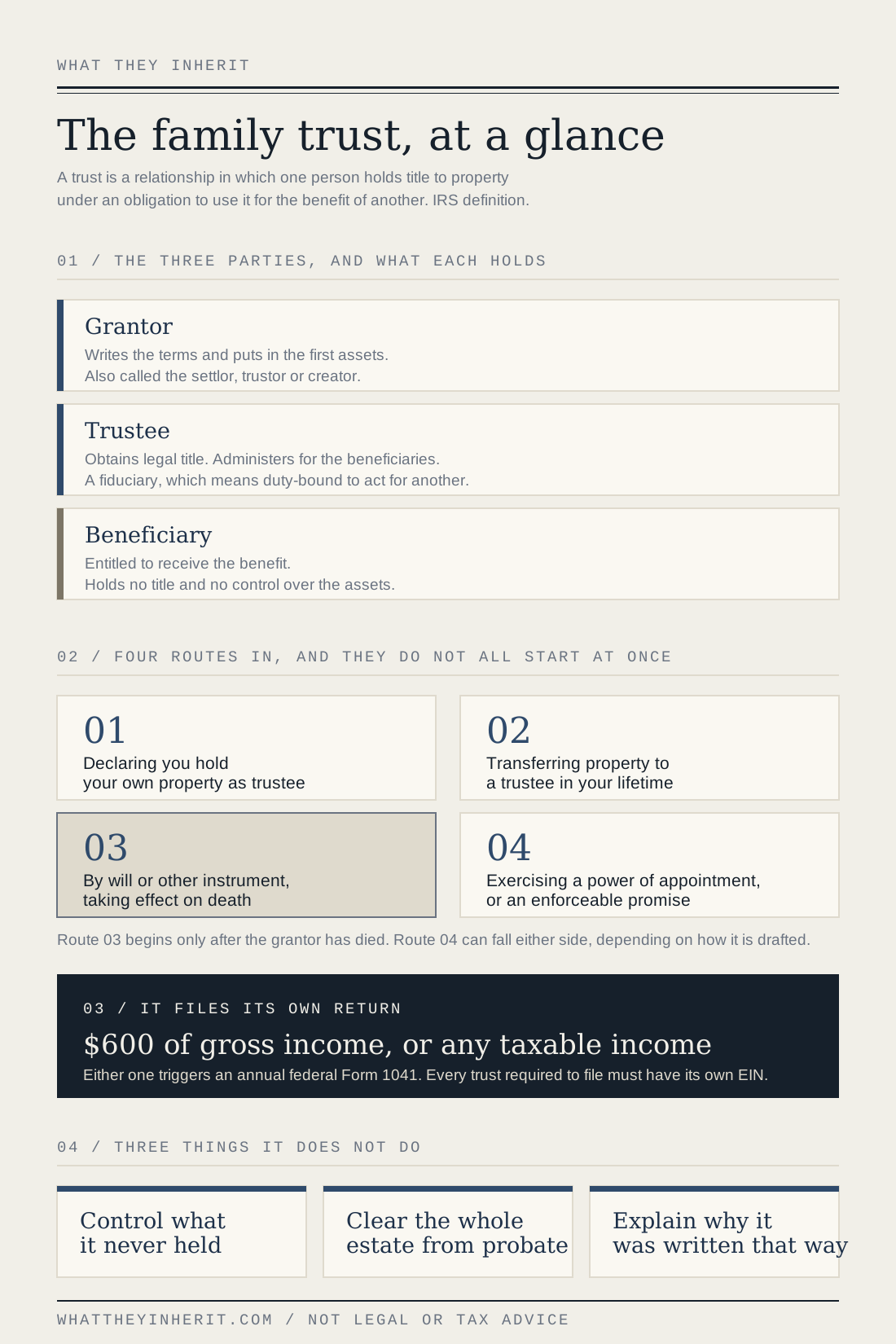
A trust is a relationship in which one person holds title to property under an obligation to keep or use that property for the benefit of another. That is how the Internal Revenue Service frames it in general, in its definition of a trust published as part of its guidance for tax-exempt organisations, and it is worth reading twice, because almost nothing in the sentence describes a piece of paper.
A trust is easy to picture as a safe. Something you buy, install, and stop thinking about. The definition says otherwise. What gets created is an arrangement between three parties that has to be administered by a human being, in some cases for decades after the person who set it up has died. Signing it finishes the paperwork. It does not finish the job, and the job is the one that runs for decades.
The three people in the room
The IRS sets out the parties plainly in its guidance on trust arrangements, and the whole subject sits inside these three roles.
The grantor, also called the settlor or trustor, creates the trust relationship and, in the IRS's own wording, is generally the owner of the assets initially contributed to it. The grantor writes the terms: what the trustee may do, how distributions work, whether the arrangement can be changed later, who takes over as trustee, and which state's law governs the whole thing.
The trustee takes legal title to the trust assets and has to administer them for the beneficiaries according to the terms written in the instrument. The IRS is direct about what that status means: a trustee is a fiduciary, meaning an individual or organisation charged with the duty to act for the benefit of another.
The beneficiaries are the people entitled to receive benefits from the trust.
That asymmetry is why the trustee role deserves more scrutiny than any comparison of trust types. The grantor's decisions are made up front, over a few meetings. The trustee's decisions are made every year, for as long as the trust runs, in conditions nobody in those meetings could see coming.
| Role | What they hold | How long it lasts |
|---|---|---|
| Grantor | The power to set the terms, and the assets until they are transferred in | Until the trust is created and funded, then it depends on what powers were retained |
| Trustee | Legal title to whatever the trust actually holds, plus the duty to administer it | For as long as the trust runs, which can be decades |
| Beneficiary | The entitlement to benefit, but not control and not title | For as long as the terms say they benefit |
Title moves, benefit stays behind
The part that surprises people is that ownership genuinely splits. The trustee obtains legal title. The beneficiary gets the benefit. Those are two different things held by two different people, and that separation is the mechanism the whole instrument runs on.
That separation is also where the confusion around trusts starts. A beneficiary who assumes they own the house cannot sell it. A trustee who assumes they own the house has misread the job entirely. Neither of them owns it in the way people normally mean the word.
Four ways in, and they do not all start at once
The IRS lists four distinct routes by which a trust can be created: a declaration by an owner that they hold their own property as trustee, a transfer of property during the owner's lifetime to another person as trustee, a transfer that takes effect on death by will or other instrument, or the exercise of a power of appointment or an enforceable promise to create one.
Two of those routes operate while the owner is alive, and one waits until after death. The fourth, a power of appointment or an enforceable promise to create a trust, can fall either side depending on how it is written, and the IRS list does not fix its timing. Where a trust does not begin until the owner has died, the person who wrote the terms will never see how they behave in practice, will never be asked a clarifying question, and will never get the chance to say what they actually meant.
That is the argument for writing the reasoning down somewhere the instrument cannot carry it. A legacy letter is where that reasoning goes, addressed to the people who will read the trust document without you there to explain it.
The trustee is an office, not an honour
The job should decide who gets named. Not birth order, not who seems reliable at family gatherings, and not the discomfort of leaving someone out.
Look at what the role actually contains. The trustee holds legal title to assets they do not benefit from. They administer according to terms someone else wrote, in circumstances that will not match the ones those terms anticipated. They owe a fiduciary duty, which means their own preferences are not a permitted input. They may be dealing with beneficiaries who are their own siblings. And they are the person who has to say no, on the record, to a relative who needs money.
Nothing requires the trustee to be a relative. The IRS's own description of the role covers an individual or an organisation, which is the opening for a bank or a trust company to hold it instead, at a cost and with a distance from the family that cuts both ways.
The trust document does not automatically make this job easier, because it was drafted to be legally sound rather than administratively liveable. Ask these three questions before any name goes in:
- Would this person be able to refuse a distribution to their own brother and still turn up at Christmas?
- Is the trustee entitled to be paid for taking this on, and does the document actually say so?
- If they cannot serve, who takes over, and has anyone told that person?
A successor trustee clause is easy to leave as boilerplate, and that is exactly the wrong place to leave something unconsidered. The named trustee is a person, and people move country, fall ill, fall out with the family, and die in the wrong order. A trust that runs for thirty years and names one trustee is a trust with an expiry date nobody wrote down.
It files a tax return, every year, forever
This is where the difference between a document and a job becomes concrete. A domestic trust taxable under the relevant section of the code has to file its own federal return, Form 1041, once it has any taxable income for the year, or gross income of $600 or more regardless of taxable income, or a beneficiary who is a nonresident alien.
Filing that return requires the trust to have its own employer identification number. The IRS is unambiguous about it: every estate or trust required to file Form 1041 must have an EIN, applied for separately from anyone's personal tax number. Some grantor trusts can report through the grantor's own number under one of the optional methods instead, which is a question for whoever prepares the return rather than a choice to make casually.
Six hundred dollars of gross income describes a modest account earning interest rather than a wealthy trust. The threshold is low enough that an ordinary interest-bearing account can cross it, which means the arrangement can generate an annual administrative obligation that lands on the trustee, year after year, along with whatever the trust's own state requires.
The federal rules also treat a trust as domestic only if a United States court can exercise primary supervision over its administration and one or more United States persons control all substantial decisions. Families who move country, or who name a trustee who then moves country, can change that answer without meaning to. This is one of several reasons a trust needs reviewing after a move rather than after a decade.
Revocable and irrevocable, stated honestly
The common split is between a trust the grantor can still change and one they cannot, and the trade is visible in the IRS's own treatment. Where a grantor keeps the power to control or direct the trust's income or assets, including the power to revoke it, the arrangement is treated as a grantor trust and the income is generally taxed to the grantor rather than to the trust.
That is the whole shape of the bargain, stated without the sales pitch. Retained control keeps flexibility and keeps the tax consequences attached to you. Giving up control is what changes the treatment, and giving up control means exactly that: the assets and the decisions stop being yours.
What this page will not do is tell you which one your family needs. Trusts are formed under state law, the IRS says so on the face of its definition, and the consequences vary by where you live, where your assets sit, and what you are trying to achieve. That question belongs with a qualified professional in your own jurisdiction, and anyone who answers it confidently before asking where you live is not answering it.
If the term you keep running into is trust fund rather than trust, what a living trust fund actually is separates the phrase from the legal instrument.
What a trust does not do
Three limits matter here, because the marketing around trusts tends to leave them out.
It only controls what it holds. Title has to actually move for the trust to do anything, and moving it is a set of separate acts carried out with separate institutions: a new deed lodged with whoever records deeds where the property sits, a changed registration at the bank, a changed registration at the brokerage. We cover that failure itself in our piece on what an estate plan actually consists of. The point that belongs here is narrower. Confirming the transfers happened is part of the trustee's standing job rather than something the drafting lawyer finished at signing, and an unfunded trust still leaves a trustee carrying duties over assets it never received, and nobody is obliged to tell them the transfers never happened.
It does not clear the whole estate. Probate is the legal process for transferring property after death, and a California Courts self-help guide notes that an estate may need to go through probate even where there is a will. A trust can take the assets it actually holds out of that process. Everything outside it stays where it was, including anything acquired after the last funding exercise and forgotten.
It does not explain itself. The instrument says what happens. It does not say why, and beneficiaries reading it decades later will supply their own reasons for the shape of it. That gap is not a legal defect and it cannot be drafted away.
Where the sales pressure comes from
Trusts attract promoters. The IRS runs a public warning on abusive trust arrangements and gives a direct line for reporting a promotion, along with the plain advice that if a promoted arrangement applies to your investment you should consult a tax professional who is not involved in promoting it.
That last clause is the useful test. Whether the adviser is independent of the product is a question you can ask in one sentence, and the answer tells you something the sales material will not.
The decision underneath the decision
Every family arriving at this subject is really asking one of two questions, and they need different answers.
The first is administrative. Is there a way to move these assets that costs the family less time, less exposure and less delay than the default. That is a technical question with a jurisdictional answer, and the National Institute on Aging's checklist for getting your affairs in order is a reasonable place to begin reading before you pay anyone.
The second is not administrative at all. It is whether the money should arrive at once or arrive slowly, and that is a judgement about the people receiving it rather than about the instrument. A trust is very good at enforcing a timetable. It has nothing to say about whether the timetable was wise. Where a family is worried about what receiving the money will do, the difficulty is the one we set out in why generational wealth comes apart, and no drafting decision resolves it.
Answer that second question before any drafting begins. Get it wrong and the best drafted instrument in the world still pays out on the wrong timetable.
Last reviewed by the What They Inherit Editorial Team on August 19, 2026. Our sourcing and AI-use rules are public on the editorial standards page. This is general editorial content and not legal, tax or financial advice. Trusts are formed under state law and the rules governing them, and their tax treatment, differ by jurisdiction and change over time. Speak to a qualified professional where you live, and where your assets are held, before creating, funding or amending a trust.
FAQ
Nothing below is legal or tax advice, and the rules vary by state.
What is a family trust?
A trust is a relationship in which one person holds title to property under an obligation to keep or use it for the benefit of another, which is how the IRS defines it. "Family trust" is generally not a separate legal category so much as a description of who the beneficiaries are. What makes it a trust is the structure: a grantor sets the terms, a trustee holds legal title and administers the assets as a fiduciary, and the beneficiaries receive the benefit. Trusts are formed under state law, so the specifics of what yours can do depend on where it is created.
Who actually owns the property in a trust?
Ownership splits, which is the point of the instrument. The trustee obtains legal title to the trust assets and the beneficiaries hold the entitlement to benefit from them, so neither party owns the property in the everyday sense of the word. The practical consequence is the one families notice first. Property genuinely held by a trust is registered in the trustee's name acting as trustee, not in the beneficiary's name, so the person who will eventually benefit does not appear on the deed or the account at all and cannot deal with the asset directly.
What is a trustee, and what do they actually have to do?
A trustee is the individual or organisation that takes legal title to the trust assets and has to administer them for the beneficiaries according to the terms written in the instrument. The IRS is direct about what that status means: a trustee is a fiduciary, charged with the duty to act for the benefit of another rather than their own. In practice the job includes making or refusing distributions under the terms, keeping records, and handling the trust's own annual tax filing. It is an ongoing office rather than a title, and it can run for decades.
Does a trust pay its own taxes?
A domestic trust generally has to file its own federal return on Form 1041 once it has any taxable income for the tax year, or gross income of $600 or more regardless of taxable income, or a beneficiary who is a nonresident alien. Whether tax is actually owed, and by whom, depends on the type of trust: where the grantor keeps the power to control or direct the trust's income or assets, the income is generally taxed to the grantor instead. State obligations sit on top of the federal ones and vary.
What is probate?
Probate is the legal process for transferring property after someone dies. The part that catches families out is that writing a will does not by itself take an estate out of it: California Courts self-help guidance, taken here as one example of how a state describes it, notes that an estate may need to go through probate even where there is a will. Probate is the process that moves the property. It is not the document that says where the property should go, and having the second does not remove the need for the first. A funded trust can take the assets titled in its name out of that process, and everything outside the trust stays where it was. Because probate is described at state level, what it is called and when it is required vary by jurisdiction, so confirm the specifics with a qualified professional licensed where the person lived.
Does a trust avoid probate?
Only for the assets it actually holds. Probate is the legal process for transferring property after someone dies, and California Courts self-help guidance, taken here as one example of how a state describes it, notes that an estate can need to go through probate even where there is a will. A funded trust can take the property titled in its name out of that process. Anything never transferred in stays outside the trust and is dealt with the ordinary way, which is why the funding step matters more than the drafting.
Can I be the trustee of my own trust?
The IRS lists a declaration by an owner that they hold their own property as trustee among the ways a trust can be created, so the arrangement exists. The question it raises is not whether you can serve but what happens when you cannot, because a trust designed around one person's continued capacity has a gap in it. Name a successor, confirm that the successor knows and agrees, and treat that clause as load-bearing rather than boilerplate.
What is the difference between a revocable and an irrevocable trust?
The tax treatment follows the control rather than the label on the cover page. Where the grantor retains the power to control or direct the trust's income or assets, including the power to revoke it, the income is generally taxed to the grantor rather than to the trust. The practical test is therefore not what the document is called but what powers it actually leaves with the person who set it up: the power to amend the terms, to change the trustee, to direct investments, to take assets back. Read those clauses before signing, because they are what determines which kind of trust you have created.
How do I know if my family needs a trust at all?
Two different questions get asked at once here, and only one of them is technical. Before paying anyone to answer either, settle three facts: what you actually own and how each asset would move without a trust, whether there is a person you would genuinely trust to administer it for as long as the trust would run, and whether the concern is the speed of the transfer or the speed at which the money reaches the people receiving it. A trust answers the first and third of those and is the wrong tool for a family that cannot answer the second. If no name survives that middle question, that is information, and it is worth more than a drafting fee.
Sources
- definition of a trust (irs.gov)
- guidance on trust arrangements (irs.gov)
- Form 1041 (irs.gov)
- may need to go through probate even where there is a will (selfhelp.courts.ca.gov)
- National Institute on Aging's checklist for getting your affairs in order (nia.nih.gov)